-
화상영어회화_기초영어 단수명사, 복수명사 Nouns(singualr and plural)DO study English 2025. 8. 25. 08:16반응형
*화상영어-4_2025.08.13.수_with Albert
Nouns
singular and plural
목차
- What is a Noun?
- Noun Examples
- Plural noun rules
1. Noun Definition
- A noun is a word that names something, such as a person, place, thing, or idea.
2. Nouns Examples
- Person : brother, lawyer, classmate, Chris
- Place : Spain, cith, bedroom, shool
- Animal : dog, monkey, cat, bird
- Thing : pencil, bag, cellphone, car
- Ieda : justice, freedom, love
1) Proper VS Common Nouns
*A proper noun is a specific name of a person, place, or thing, and is always capitalized.
- ex) England, Kelly, The sun
*A common noun is the generic name of an item and is not capitalized.
(unless it's at the beginning of a sentence or in a title.)
- ex) pencil, river, bike
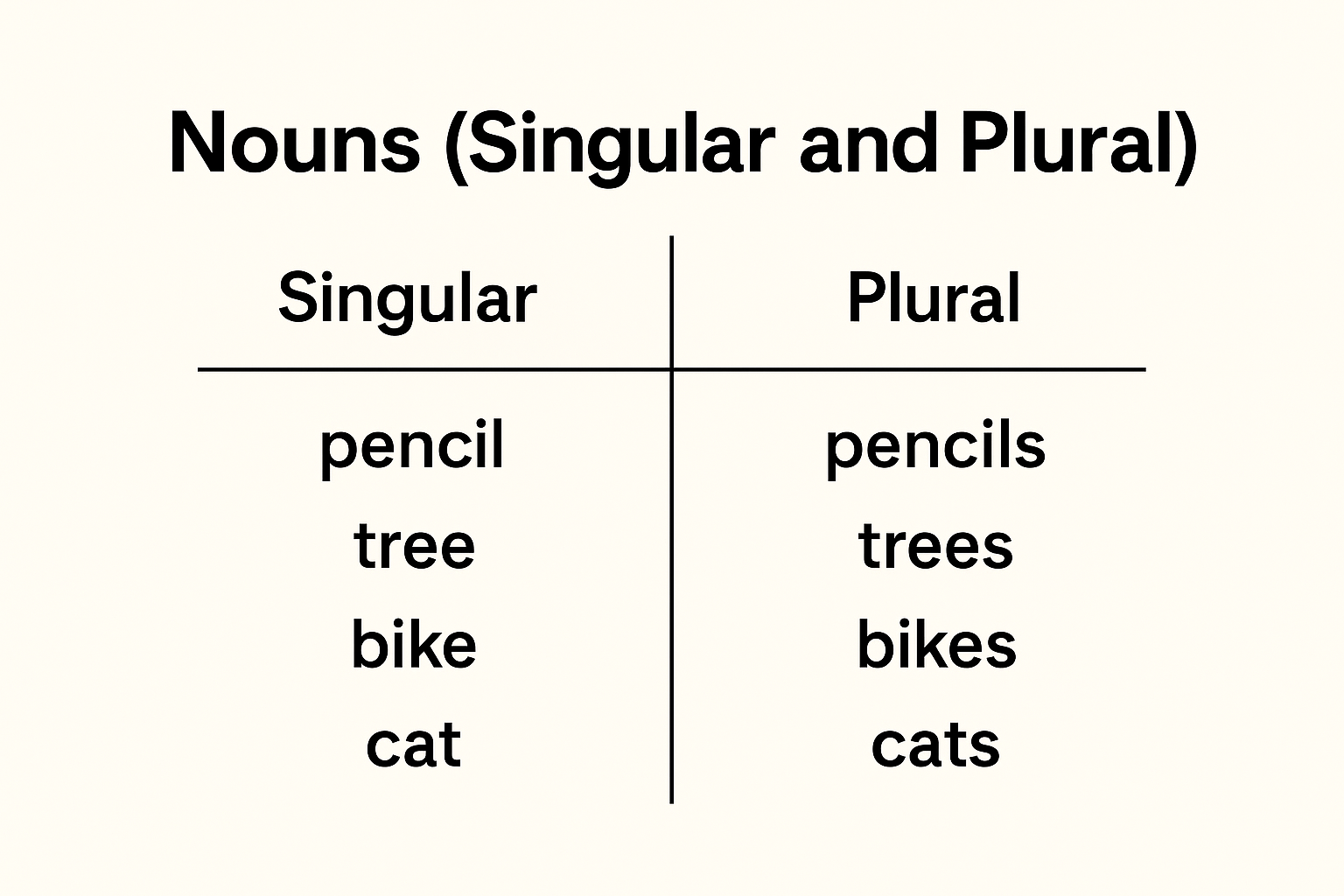
2) Singular VS Plural Nouns
*When you are talking about one thing, a singular noun is used.
- ex) pencil, tree, bike
*When you are talking about more than one thing, a plural noun is used.
- ex) pencils, trees, bikes
3. Plural Noun Rules
Let's lool at how to change a singular noun into a plural noun.....
1) To make regular nouns plural, add -s to the end.
- one camera → two cameras
- one cup → three cups
2) It the singular noun ends in -s, -ss, -sh, -ch, -x, or -z, add -es to the end to make it plural.
- one box → two boxes
- one bus → two buses
3) If a singular noun ends in -y and the letter before the -y is a consonant, change the ending to -ies to make the noun plural.
- one puppy → two puppies
- one bunny → two bunnies
4) If the singulr noun ends in -o, add -es to make it plural.
- one tomato → three tomatoes
- one volcano → two volcanoes
5) Some nouns don't change at all when they're pluralized.
- one sheep → two sheep
- one deer → two deer
- rice → rice
6) Nouns that are irregular, don't follow any particular rules.
- one mouse → two mice
- one child → two children
- person → people
- cactus → cacti
- a die → two dice
1. 명사의 정의 (Noun Definition)
**명사(Noun)**란 사람, 장소, 사물, 동물, 개념 등을 나타내는 단어입니다.
2. 명사의 예시 (Examples of Nouns)
- 사람(Person) : brother(형/오빠), lawyer(변호사), classmate(반 친구), Chris(크리스)
- 장소(Place) : Spain(스페인), city(도시), bedroom(침실), school(학교)
- 동물(Animal) : dog(개), monkey(원숭이), cat(고양이), bird(새)
- 사물(Thing) : pencil(연필), bag(가방), cellphone(휴대폰), car(자동차)
- 개념(Idea) : justice(정의), freedom(자유), love(사랑)
3. 명사의 종류 (Types of Nouns)
(1) 고유명사(Proper Noun) vs. 보통명사(Common Noun)
- 고유명사 (Proper Noun)
→ 특정한 사람, 장소, 사물의 이름을 말하며, 항상 대문자로 시작합니다.- 예: England(잉글랜드), Kelly(켈리), The Sun(태양)
- 보통명사 (Common Noun)
→ 일반적인 이름으로, 문장 첫 단어나 제목이 아니면 소문자로 씁니다.- 예: pencil(연필), river(강), bike(자전거)
(2) 단수명사(Singular Noun) vs. 복수명사(Plural Noun)
- 단수명사 (Singular Noun) : 하나의 대상만 가리킬 때 사용
- 예: pencil, tree, bike
- 복수명사 (Plural Noun) : 둘 이상을 가리킬 때 사용
- 예: pencils, trees, bikes
4. 복수 명사 규칙 (Plural Noun Rules)
- 일반적인 명사 → -s 붙이기
- one camera → two cameras
- one cup → three cups
- -s, -ss, -sh, -ch, -x, -z 로 끝나는 경우 → -es 붙이기
- one box → two boxes
- one bus → two buses
- 자음 + -y 로 끝나는 경우 → y를 i로 바꾸고 -es 붙이기
- one puppy → two puppies
- one bunny → two bunnies
- -o 로 끝나는 경우 → -es 붙이기
- one tomato → three tomatoes
- one volcano → two volcanoes
- 형태가 변하지 않는 복수 명사
- one sheep → two sheep
- one deer → two deer
- 불규칙 복수 명사 (Irregular Plural Nouns)
- one mouse → two mice
- one child → two children
출처: https://games4esl.com/
Nouns-PowerPoint-Lesson.pptx8.11MB제 글을 읽어주셔서 감사합니다 :)
좋아요 & 공유를 부탁드려요~
당신의 좋아요는 글쓴이에게 많은 도움이 됩니다.
반응형'DO study English' 카테고리의 다른 글
화상영어회화_기초영어 Action Verbs 동사에 대해 알아봐요. (1) 2025.08.29 화상영어회화_기초영어 Pronouns 대명사 에 대해 알아봐요 (2) 2025.08.28 화상영어회화_기초영어 관사 A/An/The 차이 (0) 2025.08.22 화상영어회화_기초영어 요일 영어로? 월 영어로? (2) 2025.08.19 화상영어_ 단어 공부 (6) 2025.08.17